





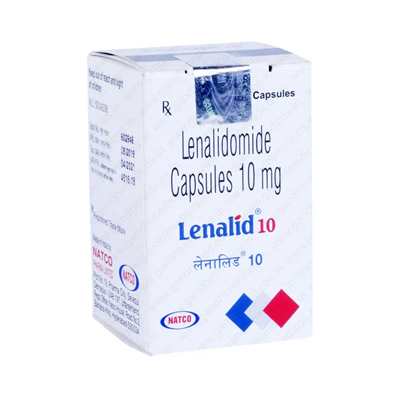
Description
Lenalid 10 mg (Lenalidomide) is an anti-cancer drug used in patients suffering from disorders or cancers of the blood. Lenalid 10 mg (Lenalidomide) is preferably indicated for myelodysplastic syndrome (MDS), a group of cancers wherein blood cells become immature, leading to overcrowded, unhealthy blood cells. Lenalidomide is speculated to work its action by stopping the growth of blood vessels that nourish these cancerous cells (Anti-angiogenesis).
Additional properties of Lenalidomide:
- • It affects the process of division and multiplication of cancerous cells (Cell-proliferation)
- • It restricts the production of chemicals that are used in the communication of cancerous cells
- • If it triggersan immune response, thereby determining the working of the immune system (Immunomodulatory effects)
- • It assists in altering the production of chemicals important for the growth and survival of cancerous cells i.e. cytokines (Antineoplastic)
- • It can affect the genes responsible for carrying out processes of self-destruction (apoptosis) and metabolism.
Administration of Lenalid 10 mg (Lenalidomide):
Lenalid 10 mg (Lenalidomide) is given orally in a form of 10 mg dosage once daily in the morning or evening. Once swallowed, the dose is completely absorbed (bioavailable) within 6 hours of administration. Lenalidomide is further metabolized in the liver and distributed throughout the cancerous region. Once it completes its action, subsequently, more than 50% of the dose is expelled from the body within 3 to 5 hours predominantly in the form of urine (90%). In patients with kidney (renal) problems, approximately 40% of lenalidomide is excreted during a single dialysis session.
An initial dose of Lenalid 10 mg (Lenalidomide) for patients with renal impairment MDS:
As the drug is not readily excreted from the kidney, the initial dosage of lenalidomide needs to be adjusted in patients with moderate or severe problems in kidney problems with MDS. The adjustment is very crucial for appropriate drug exposure in such patients. The table below will show the initial dose of lenalidomide for patients in different stages of kidney problems with MDS.
When should Lenalid 10 mg (Lenalidomide) be avoided or used cautiously?
- • If the patients had negative pregnancy tests (2) before taking lenalidomide, it is important to avoid having sex for 4 weeks before and after treatment
- • If patients have any sort of bleeding complications (hematologic toxicity), dose reduction or adjustment is highly recommended
- • If patients are at risk of heart problems (deep vein thrombosis or pulmonary embolism)
- • If patients are suffering from a condition where the cancerous cells are overkilled, spraying their contents in the blood (tumor lysis syndrome)
- • If patients have a risk of liver and kidney disease
- • If patients are lactose intolerant, the dose should be altered accordingly, as lenalidomide contains lactose
- • If patients get allergic reactions from drugs or skin rashes, the dose and frequency should be adjusted.
Most common side-effects of Lenalid 10 mg (Lenalidomide) in MDS patients:
- • Decrease in platelets (Thrombocytopenia)
- • Fever with other signs of infection (Febrile neutropenia)
- • Tiredness (Fatigue)
- • Irritation in the nose and pharynx region in the neck (Nasopharyngitis)
- • Shortness of breath (Dyspnea)
- • Continuous itchiness of skin (Pruritus)
- • Continuous itchiness of skin (Pruritus)
- • Swelling caused by to unwanted gathering of fluids (peripheral edema)
- • Joint pain (Arthralgia)
- • Increased temperature of the body (Pyrexia)
- • Sudden bleeding through the nose (Epistaxis)
Most common ones:
- • Stomach problems like diarrhea, constipation
- • Nausea
- • Pain in the back and muscles
- • Rashes on the skin
- • Dizziness
- • Headache



Reviews
There are no reviews yet.